

Low-Volume Trial Production: Why Smart Teams Bridge the Gap Between Prototyping and Injection Molding
Between “one sample that works” and “a steel mold that costs five figures” lies the stage that decides whether a hardware product lives or dies.
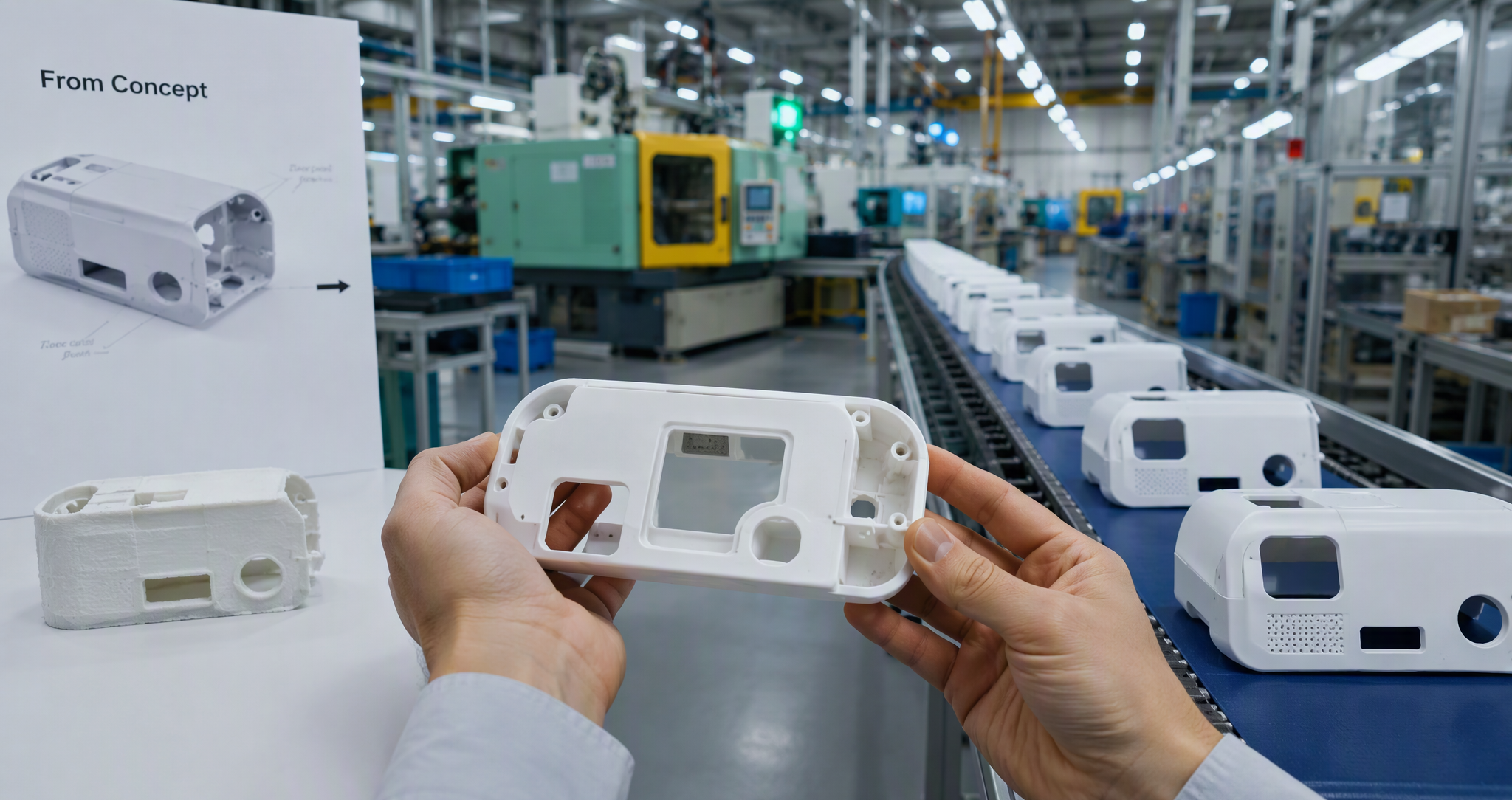
From a single prototype in hand to rows of finished parts on the line — the journey every hardware product makes.
Every hardware product travels the same road: idea, first prototype, validation, mass production. The dangerous part of that road is the middle — the stretch between “one sample that works” and “a steel mold that costs five figures.” Low-volume trial production (also called bridge production or pilot runs) exists to make that stretch safe.
This guide explains why companies run trial production, how it differs from first-article prototyping and from full injection molding, what each route is used for, and the honest pros and cons of all three.
1. Why Low-Volume Trial Production Exists
A first prototype proves a design can work. Mass production proves a business can scale. Between those two proofs sits a list of uncomfortable questions that only real parts in real quantities can answer:
- Will customers actually buy it? Market testing needs 100–1,000 sellable units, not one showroom sample.
- Does the design survive the real process? A part that 3D prints beautifully may warp, sink, or trap air when injected in production-grade resin.
- Can it pass certification? Regulatory and reliability testing (UL, CE, FDA, drop tests, aging tests) typically requires multiple units made from the final production material — a requirement most prototype processes cannot meet.
- Is the assembly line ready? Pilot runs expose fixture, tolerance-stack, and assembly problems while they are still cheap to fix.
- Can we afford the steel mold yet? Hardened production tooling runs $10,000–$100,000+ and takes 8–20 weeks. Trial production generates early revenue and feedback while that investment is still being prepared.
Skipping this stage and jumping straight to hardened tooling is the classic way to turn a small design mistake into a five-figure mold modification.
2. First-Article Prototyping: Fast Answers, Not Real Products
Prototyping — 3D printing (SLA/SLS/FDM), CNC machining, or quick vacuum casts — answers design questions at the lowest possible cost and highest possible speed.
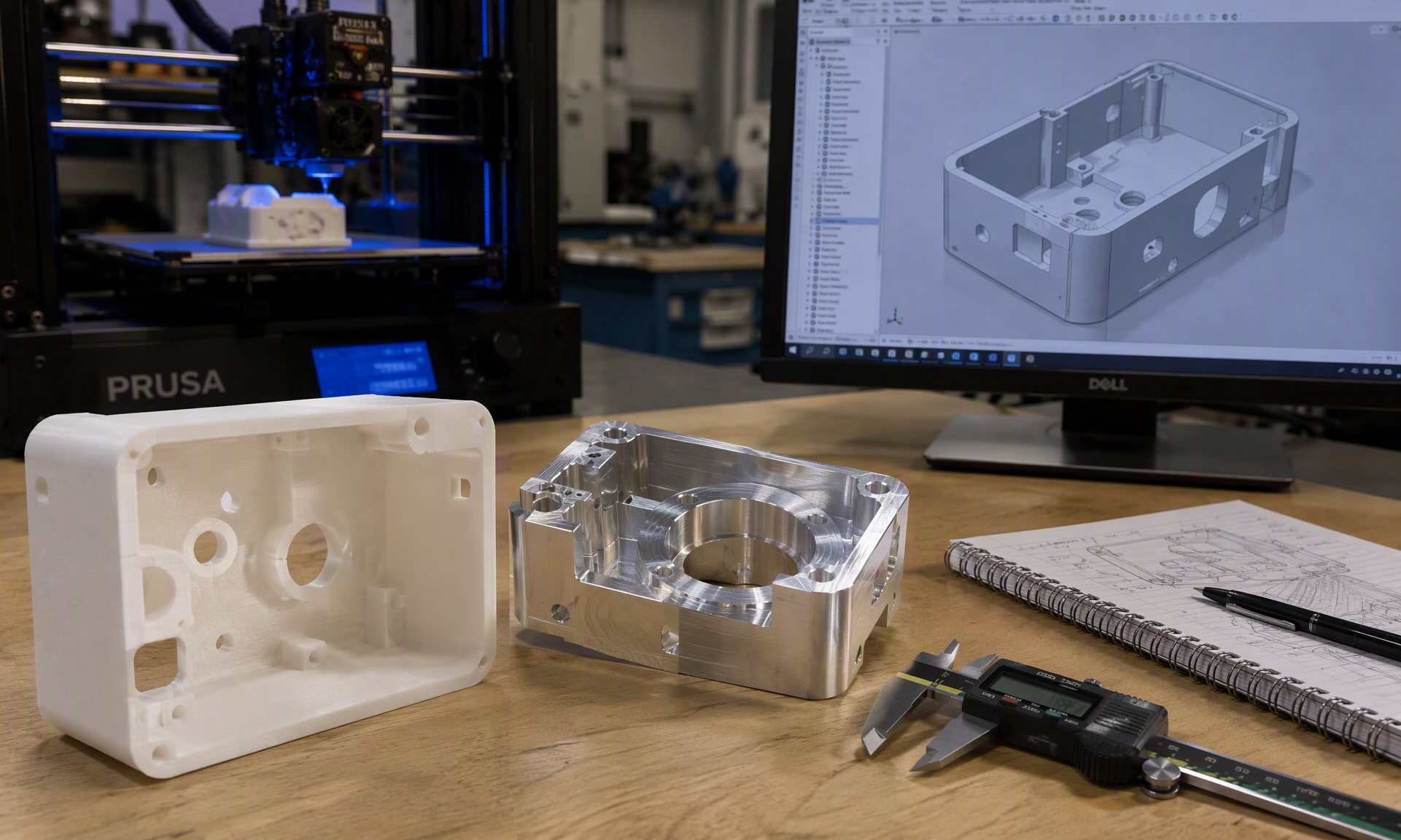
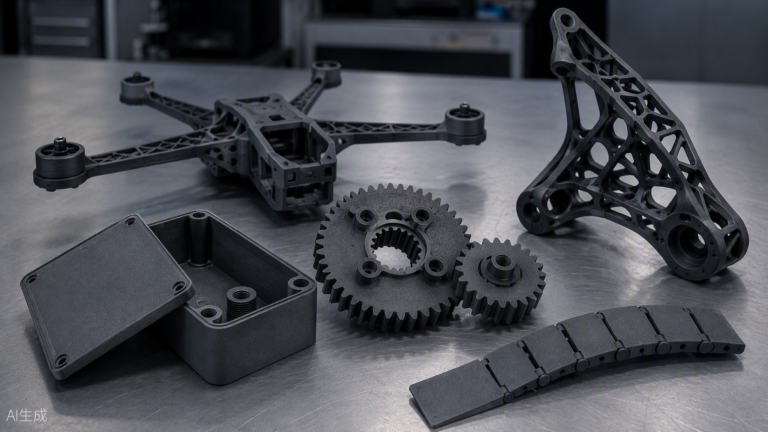
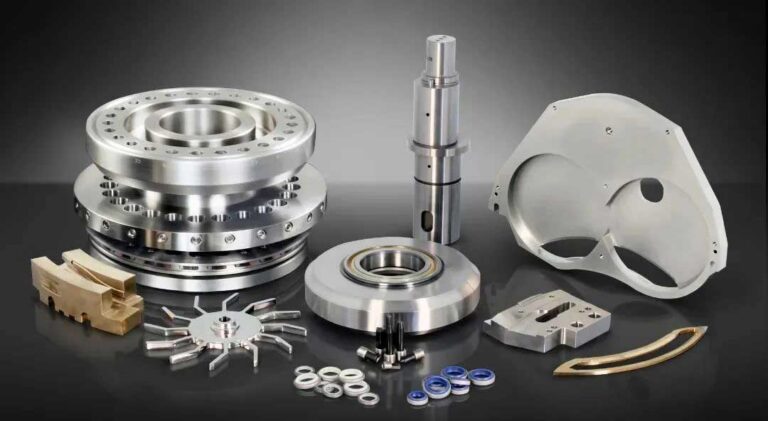
Rapid prototyping on the bench: a 3D-printed enclosure, a CNC-machined aluminum part, and the CAD model they came from.
What it’s for: concept visualization, form-fit-function checks, design iteration, stakeholder and investor demos, early ergonomic testing.
Strengths
- Speed. Parts in hours to days; design changes cost nothing but a new file.
- No tooling. Zero upfront mold investment — ideal when the design is still moving.
- Design freedom. Internal channels, lattices, and organic shapes that no mold can produce.
Weaknesses
- Not production materials. Prototype resins and prints often lack the chemical resistance, UV stability, flame rating, or isotropic strength of production plastics.
- Not production quality. Layer lines, anisotropic strength, and looser tolerances mean test results can mislead.
- Bad economics at quantity. Per-part cost stays flat — 500 printed parts cost roughly 500× one part.
3. Low-Volume Trial Production: Real Parts, Real Materials, Real Answers
Trial production typically covers 100 to 10,000 units, using processes that balance tooling cost against part quality: rapid (soft) injection molding with aluminum or P20 pre-hardened steel molds, vacuum casting with silicone molds, and CNC machining for metal or high-precision parts.
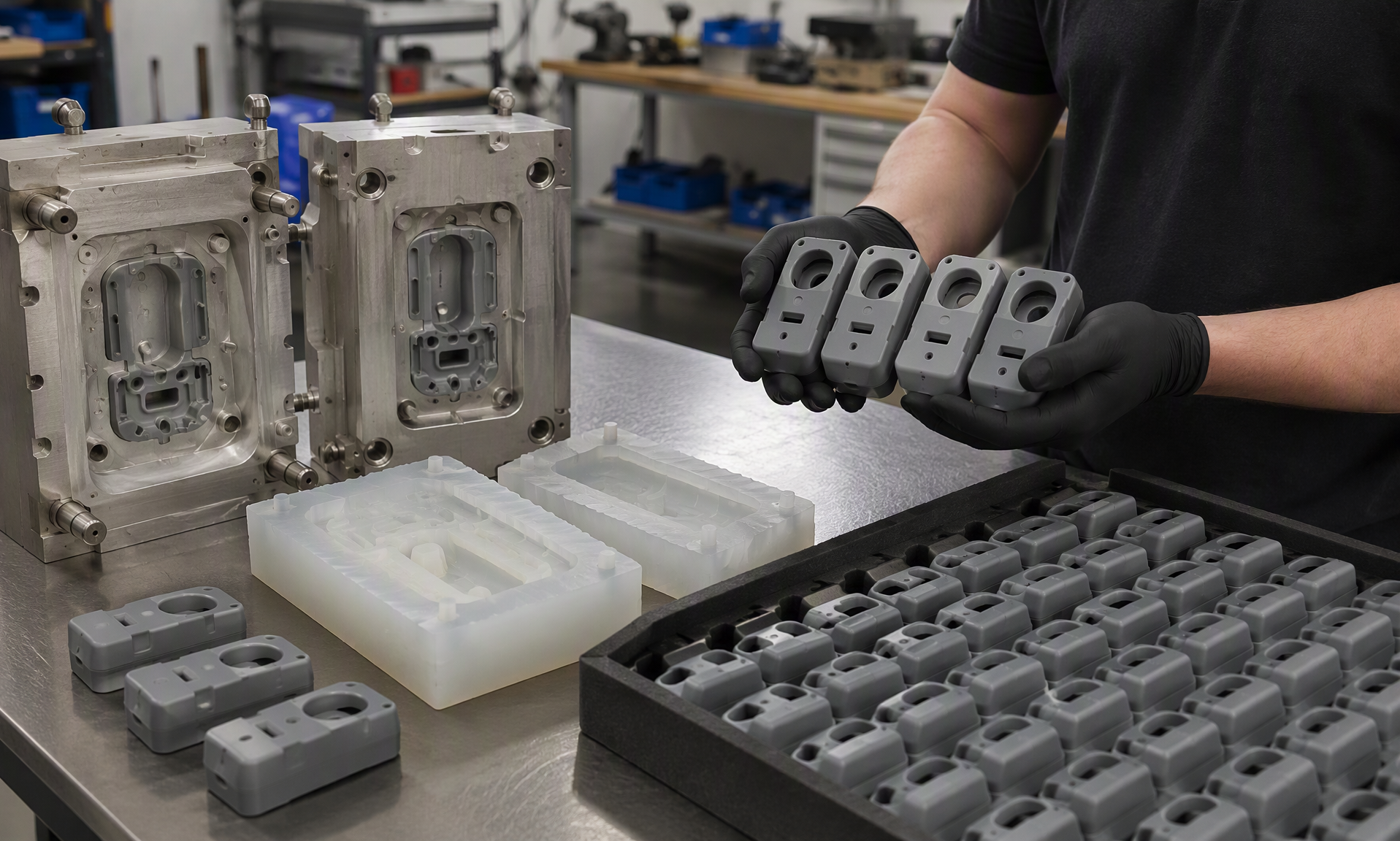
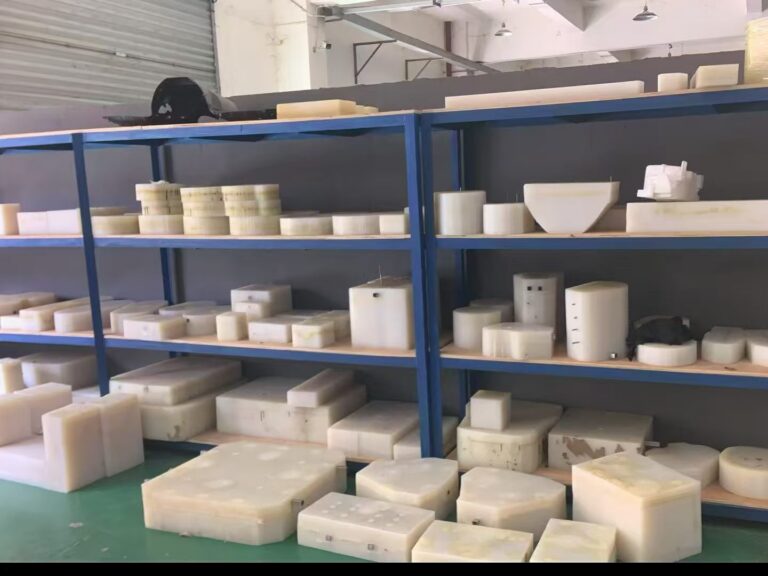
Low-volume production: an aluminum soft mold, a silicone vacuum-casting mold, and a tray of identical trial-production parts.
What it’s for: market tests and crowdfunding fulfillment, pilot production, regulatory and certification testing in final materials, early customer samples, bridging the 2–5 month wait for hardened tooling, and low-volume products that may never justify a steel mold at all.
Strengths
- Production-grade parts. Soft-mold injection molding uses the exact resin of mass production — so mechanical, thermal, and regulatory tests are meaningful.
- Fast and affordable tooling. Aluminum bridge molds cost roughly $1,000–$10,000 and ship in 2–4 weeks, versus $10,000–$100,000 and 8–20 weeks for hardened steel.
- De-risks the big decision. Design changes during trial production modify a cheap mold — or just a CAD file — instead of a hardened tool.
- Cash-flow friendly. Spreads investment over time and can generate revenue before mass production begins.
Weaknesses
- Higher per-part cost than mass production — tooling amortizes over fewer parts, and cycles are less optimized.
- Limited mold life. Soft molds wear: aluminum molds typically survive thousands to tens of thousands of shots, not millions.
- Slightly looser consistency. Less automation and shorter process tuning windows mean more QC attention is required.
- Process mismatch risk. Parts from vacuum casting or soft tooling may not perfectly reflect hard-tool behavior — DFM review must start early.
4. Injection Molding with Hardened Tooling: The Economics of Scale
Mass-production injection molding is a different discipline entirely. Multi-cavity hardened steel molds, closed-loop process control, SPC monitoring, and automated part handling exist for one purpose: the lowest possible cost per identical part, millions of times over.
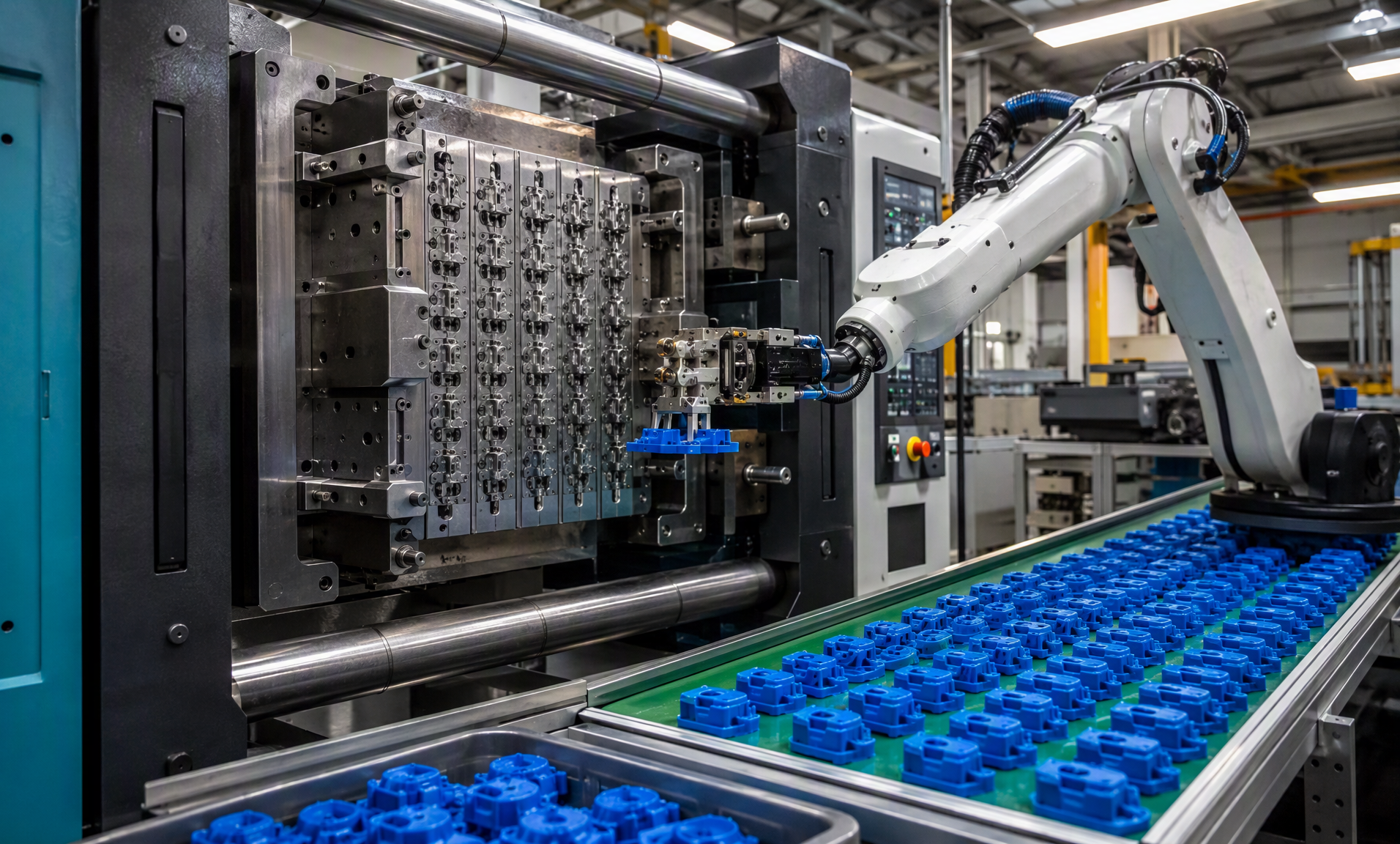
Mass production: a hardened multi-cavity steel mold in an injection molding machine, with robotic part extraction.
What it’s for: sustained volumes from tens of thousands into the millions; consumer electronics, automotive, medical disposables, packaging — anywhere unit cost and consistency decide competitiveness.
Strengths
- Lowest unit cost. Once the mold exists, parts cost pennies to dollars each.
- Unmatched repeatability. Cpk-controlled processes hold micron-level consistency across millions of cycles.
- Full material freedom. Any production thermoplastic, from commodity PP to glass-filled PEEK.
- Mold longevity. Hardened steel tools run a million-plus cycles with maintenance.
Weaknesses
- Heavy upfront capital. $10,000–$100,000+ before the first part ships.
- Long lead time. 8–20+ weeks for complex multi-cavity tools.
- Change is expensive. A parting-line or gate modification on a hardened tool means weeks and thousands of dollars.
- Design constraints. Draft angles, uniform wall thickness, and demolding physics limit geometry.
5. Side-by-Side Comparison
| Factor | First-Article Prototyping | Low-Volume Trial Production | Mass Injection Molding |
| Typical quantity | 1–100 pcs | 100–10,000 pcs | 10,000–1,000,000+ pcs |
| Tooling cost | None | $1,000–10,000 (soft/aluminum mold) | $10,000–100,000+ (hardened steel) |
| Lead time | Hours–days | 2–4 weeks | 8–20+ weeks |
| Per-part cost | Alta | Medio | Lowest |
| Material fidelity | Simulated/limited | Production-grade | Production-grade |
| Coherencia | Low–medium | Medium–high | Highest (SPC/Cpk controlled) |
| Design-change cost | Nearly free | Low (soft mold edit) | Muy alta |
| Lo mejor para | Design validation | Market test, certification, bridge revenue | Scale economics |
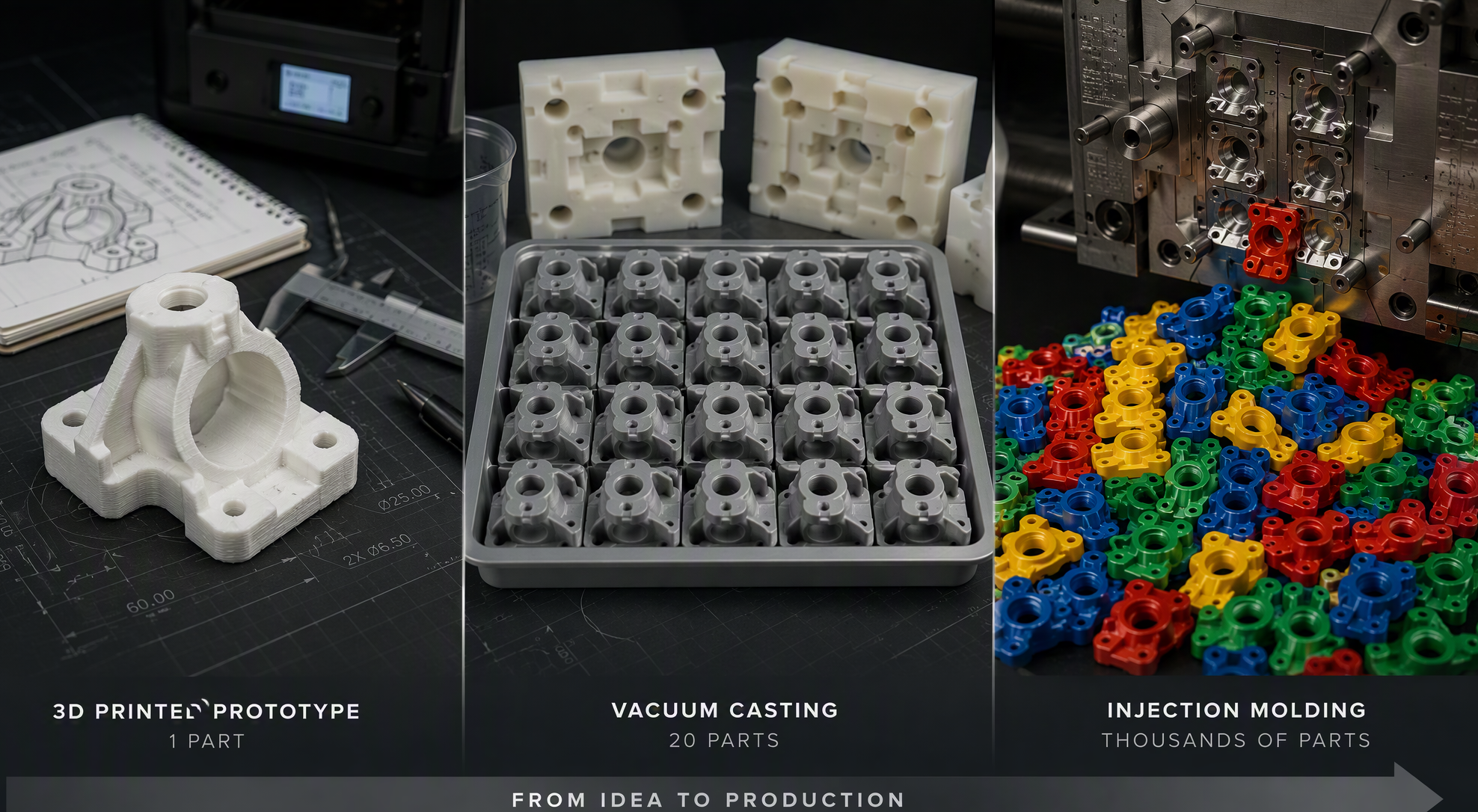
Three routes compared: one 3D-printed prototype, a tray of vacuum-cast parts, thousands of injection-molded parts.
6. How to Choose — A Practical Playbook
- 1. Design still changing? Stay with prototyping. Cutting any mold now is premature.
- 2. Design frozen, market unproven? Trial production. Get real parts into real hands before committing capital.
- 3. Certification required? Trial production in the final resin — certification bodies want production-material parts.
- 4. Demand proven and stable? Go to hardened tooling. The break-even point for steel molds typically sits between 5,000 and 50,000 parts, depending on complexity.
- 5. Product will only ever sell in hundreds? Trial production is your production — many products never need a hardened mold.
The strongest programs use all three in sequence: prototype to learn, trial production to earn and validate, mass production to scale.
7. Conclusion
First-article prototyping, low-volume trial production, and hardened injection molding are not competitors — they are three gears of the same machine, each engaged at the right speed. Prototyping buys knowledge cheaply. Trial production buys certainty and early revenue at moderate cost. Mass production buys scale. Companies that skip the middle gear sometimes get lucky; companies that use it almost never write five-figure checks to fix a mold that was cut too early.
Ready to plan your route from prototype to production? At Utely Machine (www.utelymachine.com), we cover the full journey under one roof: rapid prototyping (3D printing, CNC machining), vacuum casting and rapid soft tooling for trial runs of 100–10,000 parts, and full injection molding with hardened steel molds — all backed by DFM review, material certification support, and precision finishing. Send us your STEP file for a free DFM analysis and a 24-hour quotation, and our engineers will tell you honestly which stage your project is really at.